Cost and Lead Time Comparison: String vs Central Inverters
String and central inverters differ significantly in upfront cost, installation labor, and supply chain exposure. A string inverter requires more units per MW, increasing procurement complexity but lowering single-point failure risk. Central inverters offer lower hardware cost per megawatt but carry longer lead times due to larger component manufacturing.
- String inverters increase unit count per megawatt, which raises procurement workload and exposes projects to supply chain fragmentation.
- Central inverters reduce the number of units but depend on longer manufacturing cycles for large power electronics.
- RFQs must itemize installation labor, integration services, and spare parts to compare quotes fairly across architectures.
- Lead time risk is highest for central inverters because a single delayed shipment can stall the entire array commissioning.
What drives the cost of a string inverter deployment
A string inverter system distributes power conversion across multiple smaller units. Each unit takes DC input from a specific group of solar strings and converts it into AC for the grid connection. This distributed architecture changes the cost structure significantly compared to a single large central inverter.
The hardware cost per kilowatt is typically higher in a string inverter configuration. You purchase more individual units, which increases the total number of power electronics modules. You also need more mounting hardware for each unit, more DC cabling to feed each inverter, and more monitoring points to track performance. While the per-unit price for a string inverter is often lower than a central inverter of equivalent total capacity, the aggregate quantity drives the total bill of materials higher. For example, a 1 MW string inverter setup might require ten 100 kW units, whereas a central inverter might use two 500 kW units. The ten units mean ten times the mounting brackets, ten times the local control boards, and ten times the AC output breakers.
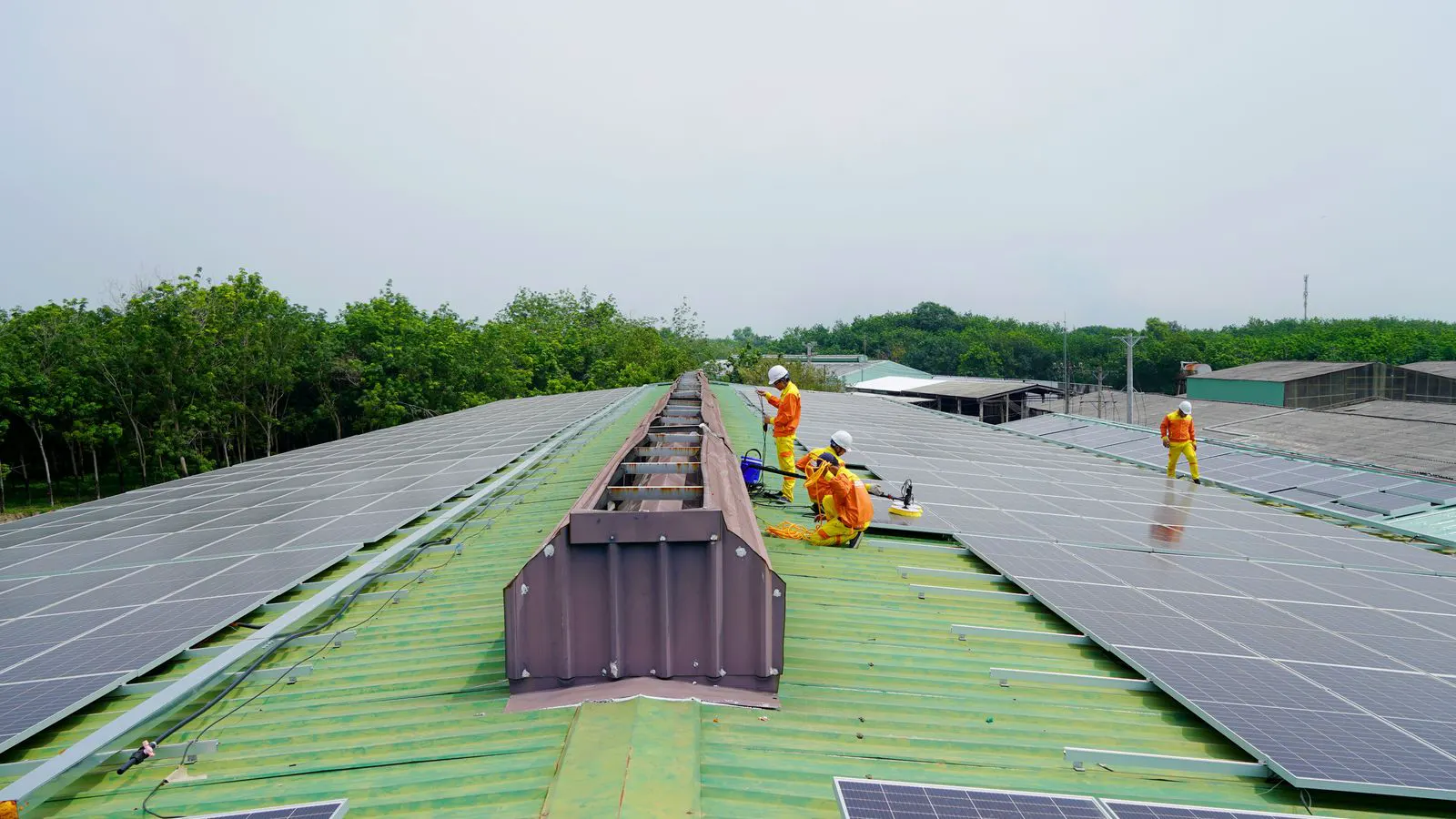
Labor costs shift as well. A string inverter installation requires more physical touchpoints. Technicians must mount each unit individually, usually on the array or nearby structures. They must connect DC strings to each local inverter, terminate AC outputs, and configure local monitoring protocols. This increases the installation crew size and the days on site. In utility scale projects, this labor premium is a major line item. You need more people to perform the repetitive tasks of mounting and wiring. You also need more time to inspect each unit before energizing it.
There are offsets to consider. String inverters tolerate partial shading and soiling more gracefully than central units. If a section of the array is shaded by a tree or covered in dust, only that specific inverter suffers a power drop. The rest of the system continues to perform at rated levels. A failed unit takes down only a small portion of the array. This reduces the expected energy loss over the system life. You also avoid the massive central switchgear room that a central inverter requires. That saves on civil works, ventilation, and fire suppression systems. The space savings can be significant on sites with limited footprint.
How central inverter costs differ from string architectures
A central inverter concentrates all DC input into one or a few large units. The power electronics in these machines are highly complex. They handle much higher current and voltage levels with fewer conversion stages per unit of power. The design focuses on maximizing efficiency at high load levels and minimizing the footprint of the power conversion stage.
The cost per kilowatt for a central inverter is generally lower. You buy fewer units. The total power electronics mass and material volume per megawatt is smaller. This gives the central architecture a hardware advantage. The copper content in the inverters themselves is lower because the current paths are shorter and fewer. You also spend less on the local control electronics for each string.
The installation cost profile is different. You install one large unit or a small number of large units. The physical labor for mounting is reduced. However, the DC collection system must be designed to feed all strings into the central inverter. This often requires longer DC cable runs and larger conductors. The voltage drop over long DC cables must be carefully calculated to ensure the central inverter receives power within its operating window. The AC side needs heavy-duty switchgear, transformers, and protection equipment. The AC breakers must handle the full capacity of the plant, which increases the cost of the switchgear room.
The balance of cost shifts to integration. A central inverter requires precise synchronization with the grid. The AC connection is a single point of failure. If that inverter trips, the entire array loses power. You need robust protection systems to prevent cascading faults. The protection relays must be tuned to distinguish between grid faults and local equipment faults. This integration work requires specialized engineers and testing equipment.
How to compare lead times for string versus central inverters
Lead time is where the architecture choice matters most. A string inverter project requires purchasing many individual units. Each unit has its own production slot. Supply chain delays can affect different batches at different times. The manufacturing process for string inverters is often more modular, allowing for continuous production. However, the component availability for each unit can vary.
The risk is fragmentation. You might receive half the units on schedule and the other half months later. This complicates site staging and commissioning. You need storage space for units that arrive early. You also need to coordinate installation windows so you are not waiting on missing hardware. If a batch is delayed, you may have to idle the installation crew. This idle time is expensive.
A central inverter project requires fewer units, often one or two. The manufacturing cycle for large power electronics is longer. These units go through extensive testing. The production queue for a single large inverter can be long. If it is delayed, the whole project waits. There is no way to phase the delivery of a single unit. You either have it or you do not.
The supply chain for string inverters is broader. More manufacturers and component suppliers are involved. This can be an advantage because you can source from multiple vendors. It can also be a disadvantage because each vendor has its own production constraints. You must manage multiple purchase orders and multiple delivery schedules.
What to include in a fair RFQ for inverter procurement
A clear RFQ is the only way to compare string and central inverter quotes accurately. Vendors will quote different scopes. One may include installation, another only equipment. One may include spare parts, another may not. A fair comparison requires identical scopes.
Start with the technical specification. State the total AC capacity, the number of strings, the voltage levels, and the grid connection point. Define the inverter architecture requirement. If you want a string inverter, specify the power range per unit. If you want a central inverter, specify the total capacity. Include the required grid code compliance parameters, such as voltage and frequency ride-through limits.
Itemize the commercial scope. Ask for unit price, total equipment cost, shipping, and import duties. Then ask for installation labor, integration services, and commissioning fees. Include the cost of spare parts, such as a percentage of the total units or specific critical components. For string inverters, specify how many spare units you want. For central inverters, specify spare modules or transformers if applicable.
Define the delivery schedule. Ask for the manufacturing date, the shipping date, and the expected arrival at site. Ask for the warranty terms and the service response time. A string inverter RFQ must account for the logistics of many small shipments. A central inverter RFQ must account for the logistics of one or two large shipments. Specify who is responsible for lifting the units into place. For central inverters, this may require a crane. For string inverters, it may require manual handling or small hoists.
How to structure the cost comparison table
The table below lists the main cost and delivery factors. Use this as a checklist when reviewing quotes. The numbers will vary by project size and location, but the structure remains the same. This table helps you identify where the cost differences are most significant for your specific project.
| Cost and Delivery Factor | String Inverter | Central Inverter |
|---|---|---|
| Unit Count per MW | Higher | Lower |
| Hardware Cost per kW | Higher | Lower |
| DC Cable Length | Shorter runs | Longer runs |
| AC Switchgear Complexity | Lower | Higher |
| Installation Labor | Higher | Lower |
| Supply Chain Risk | Fragmented | Concentrated |
| Commissioning Time | Staggered | Single point |
| Spare Parts Inventory | More types | Fewer types |
How to mitigate lead time risk in either architecture
If you choose a string inverter, mitigate risk by phasing deliveries. Ask the vendor to ship in waves that match your installation schedule. This reduces the need for long-term storage. It also lets you adjust the plan if a batch is delayed. You can install the first wave while waiting for the second. This keeps the installation crew productive.
For a central inverter, mitigate risk by ordering early. Large units have long manufacturing cycles. If your project has a fixed commissioning date, the order date must be set early. You can also negotiate a penalty clause for late delivery. This gives the vendor a financial incentive to meet the schedule. You should also verify the vendor’s production capacity before signing.
Both architectures require a detailed installation plan. The string inverter plan must account for multiple crew locations. The central inverter plan must account for heavy lifting and grid connection testing. The lead time is not just the manufacturing date. It is the time from order to grid connection. Include the time for site preparation, civil works, and testing in your schedule.
How to make the final architecture decision
The choice between a string inverter and a central inverter is not about which one is cheaper. It is about which one fits your project constraints. You must evaluate the total cost of ownership, not just the initial purchase price.
If your site has limited space, the central inverter may be easier to install. If your grid connection is a single point, the central inverter simplifies the AC integration. If your array is large and the DC collection is complex, the string inverter may reduce the cable sizing costs. Consider the site layout carefully. A string inverter setup requires more ground space for the units. A central inverter setup requires more space for the switchgear room.
Look at the total cost of ownership. A string inverter costs more upfront but may have lower maintenance costs over time. A central inverter costs less upfront but carries a higher penalty for downtime. The lead time risk is the same. You must plan for it in either case.
Review the supply chain situation before you sign. Ask each vendor for their production schedule. Ask about component availability. Ask about their track record with similar projects. The quote is not the final number. The delivery date is part of the price.
Frequently asked questions
Which inverter architecture has a lower upfront hardware cost?
A central inverter generally has a lower hardware cost per kilowatt because it uses fewer units. A string inverter has a higher total hardware cost due to the higher unit count.
How does lead time differ between string and central inverters?
String inverters face fragmented supply chain delays across many units. Central inverters face longer manufacturing cycles for fewer units. Both carry risk, but the exposure is different.
What is the main cost difference in installation?
String inverters require more labor for mounting and connection. Central inverters require less labor for the units themselves but more for heavy switchgear and long DC cables.
How should I structure an RFQ to compare quotes fairly?
Itemize equipment, installation, integration, spare parts, and delivery schedule. Define the scope clearly so vendors are comparing the same deliverables.
Can I mix string and central inverters in one project?
Some designs use multiple central inverters or hybrid configurations. This is a valid approach but requires careful electrical and control system integration.